
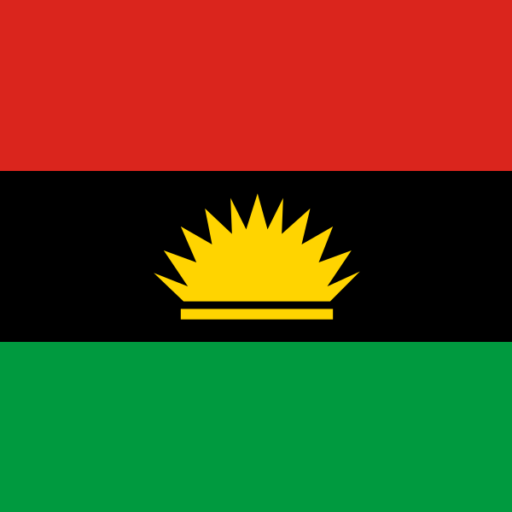
“Long ago, in the heart of Biafra, a nation was born from the ashes of war. A war that scarred the land and its people. Yet, it never killed the spirit of freedom.”
1.1 The Birth of Biafra (1967)
May 30, 1967.
Lieutenant Colonel Chukwuemeka Odumegwu Ojukwu stood before a packed hall in Enugu, the eastern capital, and declared what millions of Igbo people had been whispering in their hearts for months:
“We are free.”
The Republic of Biafra was born not from ambition, but from necessity. Not from greed, but from survival. Not from a desire to break Nigeria, but from the reality that Nigeria had already broken them.
The preceding months had been a nightmare. In September 1966, coordinated pogroms swept through Northern Nigeria. Igbo people—men, women, children, pregnant mothers—were systematically hunted down and slaughtered. Not in hidden corners, but in broad daylight. In markets. On trains. In their homes. In front of police and soldiers who either participated or watched passively.
Conservative estimates put the death toll at 30,000. Others say 50,000. Some whisper 100,000. The exact number will never be known because many bodies were never found—burned, dumped in rivers, buried in mass graves.
What is known: It was planned. It was systematic. It was a pogrom.
Trains carrying Igbo refugees fleeing south were stopped. Passengers were pulled off and killed. Women were raped before being murdered. Children were not spared. Pregnant women had their bellies cut open, their unborn babies tossed aside like trash.
These were not random acts of mob violence. These were coordinated attacks, often with military and police complicity. The message was clear: Igbos were not wanted in Nigeria.
Over two million Igbo people fled to the Eastern Region—their ancestral homeland. They came with nothing but the clothes on their backs and trauma in their eyes. They came carrying the corpses of family members. They came pregnant with children who would be born into war.
The Eastern Region, led by Ojukwu, faced an impossible choice: Stay in a Nigeria that had just demonstrated it could not or would not protect them, or declare independence and face the consequences.
On that May morning, they chose survival over submission.
“Fellow countrymen and women,” Ojukwu declared, his voice steady despite the weight of history pressing down, “you the people of Eastern Nigeria… conscious of the supreme authority of Almighty God over all mankind… aware that you can no longer be protected in your lives and in your property by any government based outside Eastern Nigeria… determined to dissolve all political and other ties between you and the former Federal Republic of Nigeria… do hereby solemnly proclaim that the territory and region known as and called Eastern Nigeria, together with her continental shelf and territorial waters, shall henceforth be an independent sovereign state of the name and title of THE REPUBLIC OF BIAFRA.”
The crowd erupted. Not in celebration of war—they knew war was coming—but in relief. Relief that finally, someone had said what needed to be said. Relief that they would not have to pretend anymore that “One Nigeria” meant anything but one graveyard.
The flag was raised: A rising sun on a field of red, black, and green. The sun represented a new dawn. The colors symbolized blood spilled, African identity, and the fertile land.
For 30 months, that sun would shine over a nation fighting for its life.
1.2 Three Million Lives Lost
The war began in July 1967, when Nigerian federal forces invaded Biafra.
“The war aim of the Biafrans,” Ojukwu would later say, “is purely to prevent ourselves from being slaughtered. Nothing more.”
But preventing slaughter proved impossible when the weapon of choice was not just bullets, but starvation.
Nigeria, with British support, imposed a total blockade on Biafra. No food in. No medicine in. No supplies in. The strategy was genocidal in its simplicity: starve them into submission.
And starve they did.
By 1968, images began leaking out that would shock the world—images the Nigerian government desperately tried to suppress. Children with distended bellies and stick-thin limbs. Eyes too large for shrunken faces. Ribs visible through paper-thin skin. The medical term was kwashiorkor—severe protein deficiency. The plain term was starvation.
Biafran children became the face of a silent genocide.
Mothers watched their babies die in their arms, unable to produce milk from their own malnourished bodies. Fathers buried children in backyards because there was no energy left to dig proper graves. Families rationed lizards, grass, and whatever else could be found. The lucky ones ate once a day. Many ate nothing for days.
Three million people died. Let that number sit with you. Three million.
To put it in perspective: That’s more than the population of many countries. That’s equivalent to wiping out the entire population of Chicago, Houston, and Philadelphia combined. That’s one person every 30 seconds for 30 months straight.
Seventy percent were children.
The world watched. Aid organizations like Caritas, the Red Cross, and individual nations tried to help, flying night missions to deliver food. But it was never enough. The blockade was too effective. The starvation too widespread.
And it wasn’t just hunger. Bombs fell on civilian targets. Markets were bombed during rush hour. Hospitals bore red crosses on their roofs—and were bombed anyway. Schools filled with children became targets. The Nigerian strategy was clear: break the Biafran spirit by making life itself unbearable.
But the spirit never broke.
1.3 “It Was an Unjust War”
Even in their suffering, Biafrans organized.
The Biafran Research and Production (RAP) unit manufactured weapons from scrap metal. Engineers built refineries to process crude oil. Scientists created “attack trade”—improvised vehicles modified for combat. Teachers continued teaching in bunkers. Doctors performed surgeries by candlelight.
Women—oh, the women—became the backbone of survival. They formed organizations to feed orphans. They ran relief camps. They farmed whatever land wasn’t bombed. They carried children on their backs while fleeing air raids. They buried the dead and kept the living alive.
Radio Biafra broadcast hope into homes every evening. Music played—defiant, beautiful music. Songs like “Land of the Rising Sun” became anthems of resistance. Artists painted. Poets wrote. Life insisted on continuing even as death surrounded them.
“If anybody is going to judge our success and failure in this war,” Ojukwu said, “it will have to depend on how much we have prevented the enemy from killing us.”
By that metric, Biafra succeeded longer than anyone thought possible. Outgunned, outnumbered, and starving, they held out for 30 months against a federal force backed by Britain, the Soviet Union, and Egypt.
But eventually, the inevitable happened. On January 12, 1970, Biafran forces surrendered. Ojukwu fled to Côte d’Ivoire to prevent his capture from being used as propaganda. The rising sun flag was lowered.
Nigeria declared: “There are no victors, no vanquished.”
But everyone knew it was a lie. There were absolutely victors and vanquished. The victors got to write the history. The vanquished got to bury their dead.
1.4 The World’s Silence
Why did the world allow this to happen?
Britain had economic interests. Oil had been discovered in the Niger Delta, much of it in Biafran territory. An independent Biafra meant losing control of that oil. So Britain supplied weapons, intelligence, and diplomatic cover to Nigeria throughout the war.
The Soviet Union saw Nigeria as a Cold War pawn worth keeping intact. They supplied MiG fighters and arms.
The United States officially stayed “neutral”—which in practice meant supporting Nigeria’s territorial integrity over Biafran lives.
The United Nations did nothing. Not because they didn’t know—aid organizations were screaming about the genocide. But because “territorial integrity” mattered more than human rights. The precedent was clear: African nations could commit atrocities within their borders without international intervention.
Only a handful of nations recognized Biafra: Tanzania, Gabon, Côte d’Ivoire, Zambia, and Haiti. It wasn’t enough.
The world chose oil over lives. Geopolitics over humanity. Silence over truth.
And Biafrans learned a lesson they would never forget: We are alone. We have always been alone. If we are to be free, we must free ourselves.
1.5 Scars That Never Healed
The war officially ended in 1970.
But in truth, it never ended. It simply transformed into a different kind of warfare—economic, political, psychological.
Nigeria promised reconciliation. They promised “3Rs”: Rehabilitation, Reconstruction, and Reintegration. What Biafrans got instead was systematic marginalization.
The 20-pound policy: Every Biafran, no matter how much money they had in the bank before the war, received only 20 British pounds after. Life savings—gone. Business capital—gone. Generational wealth—erased. It was economic annihilation disguised as currency reform.
Abandoned properties: Igbos who had fled for their lives found their homes occupied by others when they returned. The government declared these properties “abandoned” and seized them. Families who had lived in Lagos, Kaduna, or Jos for generations lost everything.
No seaports, no airports, no infrastructure: For decades, the Southeast would be deliberately denied major infrastructure projects. Roads would be left to decay. Seaports that could transform the economy would be blocked. The federal government’s message: You lost the war, and you will keep paying for it.
But more than economic wounds, there were psychological scars.
An entire generation grew up with trauma. Children who watched their siblings starve. Mothers who never forgave themselves for surviving when their babies didn’t. Fathers who felt emasculated by their inability to protect their families. Veterans who returned to a society that wanted to forget.
Post-Traumatic Stress Disorder wasn’t a term widely used then. But it was everywhere. In the nightmares. In the sudden panics when airplanes flew overhead. In the refusal to throw away food—any food—because hunger was viscerally remembered.
And there was rage. Silent, simmering rage at the injustice of it all. Rage that the world had watched them starve. Rage that Nigeria had bombed them and then said “there are no victors.” Rage that no one was held accountable. No war crimes tribunals. No truth and reconciliation commissions. Just collective amnesia imposed from above.
The scars passed to the next generation.
Children born after the war carried trauma they didn’t directly experience. They heard the stories—whispered in kitchens, shared at night, impossible to escape. They learned to be suspicious of “One Nigeria.” They learned that their grandparents’ suffering meant nothing to the state. They learned that being Igbo meant being targeted.
And they learned something else: The only people who would fight for Biafrans were Biafrans themselves.
The Legacy
Today, if you ask an Igbo elder about the war, they will tell you:
“They tried to kill us all.”
“The world watched and did nothing.”
“We survived because we had to.”
“We will never forget.”
“And we will never stop fighting for freedom.”
This is not rhetoric. It is lived memory passed down like scripture.
The war ended in 1970, but it planted seeds that would germinate decades later. Seeds of resistance. Seeds of identity. Seeds of determination that no amount of propaganda could destroy.
In the 1980s, those seeds would sprout in intellectual movements.
In the 1990s, they would grow into political activism.
In the 2000s, they would become MASSOB (Movement for the Actualization of the Sovereign State of Biafra).
In the 2010s, they would explode into IPOB—more organized, more global, more sophisticated.
And in the 2020s? The fire burns hotter than ever.
Because the war never ended. It simply changed forms.
The question that haunts every Biafran:
If they could do this to us then—with the world watching, with photographic evidence, with aid organizations documenting every atrocity—what would they do to us now, in a world with even shorter attention spans and less accountability?
The answer, as we will see in subsequent chapters, is: They are already doing it.
Different methods. Same objective. Eliminate the Biafran spirit or break it so thoroughly it can never rise again.
They failed the first time.
They are failing again.
Because some fires cannot be extinguished. Some spirits cannot be broken. Some peoples simply refuse to disappear.
Biafra is one of them.
The war that scarred a nation also forged its soul. From those ashes, a phoenix is rising. And this time, the world will not be able to look away.