
The Silence on LGBTQ Rights and Ethnic Marginalization
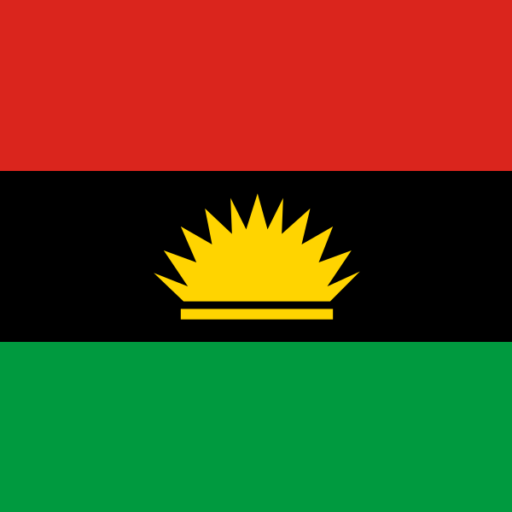
The renewed calls for Biafran independence in Nigeria reflect deep-seated grievances stemming from decades of ethnic marginalization, political exclusion, and economic neglect. Yet as the Indigenous People of Biafra (IPOB) and other separatist movements advocate for self-determination, a troubling question remains unanswered: what would become of LGBTQ individuals in an independent Biafra?
The Igbo People’s Struggle for Recognition
The Igbo people, who form the core of the Biafran independence movement, have endured systematic marginalization since the end of the Nigerian Civil War in 1970. Their grievances are numerous and well-documented. The southeastern region has been allocated only five states compared to six or seven in other geopolitical zones, resulting in reduced federal representation and resource allocation. No Igbo person has been elected president of Nigeria since independence, and the community faces underrepresentation in key federal positions, including the military, judiciary, and security services.
Infrastructure development in the southeast has lagged significantly behind other regions. The post-war reconstruction promised by the Nigerian government never fully materialized, leaving the region with inadequate roads, healthcare facilities, and educational institutions. Economic policies have been perceived as deliberately excluding Igbo entrepreneurs from major government contracts and federal appointments.
State repression has intensified in recent years. Between 2015 and 2016, security forces killed at least 150 pro-Biafran activists, according to Amnesty International. Mass arrests, extrajudicial killings, and heavy military presence in the southeast have become commonplace. The Nigerian government proscribed IPOB as a terrorist organization in 2017, though this designation was later nullified by a High Court in 2023.
The psychological wounds of the civil war remain raw. Between 1967 and 1970, an estimated 500,000 to 3 million people died, many from starvation caused by the Nigerian government’s blockade. The post-war “Igbo Abandoned Property” policy saw Igbo people lose homes and businesses in other parts of Nigeria, and the £20 flat rate refund policy wiped out the savings of millions, regardless of how much they had in their bank accounts before the war.
Nigeria’s Oppression of LGBTQ People
While the Igbo people rightfully protest their marginalization, Nigeria as a whole perpetuates severe human rights violations against LGBTQ individuals—violations that receive far less attention in separatist discourse.
Nigeria criminalizes same-sex relationships under both federal and state law. The Same-Sex Marriage (Prohibition) Act of 2014 prescribes up to 14 years imprisonment for same-sex relationships and criminalizes LGBTQ advocacy and organizations. In twelve northern states governed by Sharia law, the maximum penalty is death by stoning. In 2024, three men in Bauchi State were sentenced to death by stoning for same-sex acts.
The 2024 Human Rights Violations Report by The Initiative for Equal Rights documented 556 cases of human rights abuses against LGBTQ individuals, including 241 assaults, 173 instances of blackmail, 28 incidents of mob violence, and 44 forced evictions. Police routinely extort, harass, and detain LGBTQ people or those perceived to be LGBTQ. In December 2024, President Bola Tinubu signed legislation explicitly banning LGBTQ individuals from serving in the military.
The law creates a climate of terror. Conversion therapy is widespread and unregulated, with 49% of respondents in one study reporting having undergone such “treatment,” including physical abuse and torture. Public attitudes remain overwhelmingly hostile, with approximately 91-97% of Nigerians surveyed expressing opposition to homosexuality. LGBTQ individuals face discrimination in employment, housing, healthcare, and education with virtually no legal recourse.
The violence is not abstract. In October 2024, a gay couple in Port Harcourt was paraded and assaulted by a mob. In November, four gay men were beaten and chased from Benin City. Transgender activist Bobrisky was imprisoned for six months and sent to a men’s prison despite her gender identity. Many LGBTQ Nigerians live in constant fear, unable to seek help from authorities who are often the perpetrators of abuse.
The Deafening Silence on LGBTQ Rights in Biafran Discourse
Here lies the troubling contradiction at the heart of the Biafran independence movement: while passionately advocating for the rights of an oppressed ethnic group, separatist organizations remain conspicuously silent on the rights of LGBTQ individuals.
IPOB and other pro-Biafran groups cite political marginalization, economic exclusion, cultural suppression, and state violence as justifications for secession. These are legitimate grievances deserving of attention and redress. Yet the same movements that demand protection from persecution have not articulated any vision for protecting LGBTQ citizens who face even more severe and systemic oppression.
The predominantly Christian Igbo community shares Nigeria’s broader conservative stance on LGBTQ issues. Research indicates that many Igbo Christians view Biafran independence as protection from perceived Islamic threats from the north, but there is no evidence of separatist leaders advocating for more progressive policies toward sexual minorities. The cultural and religious conservatism that characterizes the region suggests an independent Biafra might maintain—or even intensify—the criminalization and persecution of LGBTQ people.
This silence is particularly troubling because it suggests that the fight for self-determination is not grounded in universal human rights principles but rather in ethnic nationalism. If an independent Biafra were established tomorrow, LGBTQ Biafrans would likely find themselves in the same desperate situation—or worse—as they face in Nigeria today.
Universal Rights Cannot Be Selective
The moral authority of any liberation movement depends on its commitment to universal human rights. History has shown repeatedly that independence alone does not guarantee justice if the new nation simply replaces one form of oppression with another.
For the Biafran independence movement to claim true legitimacy, it must address these questions directly:
- Will an independent Biafra decriminalize same-sex relationships?
- Will LGBTQ citizens have equal protection under the law?
- Will discrimination based on sexual orientation and gender identity be prohibited?
- Will LGBTQ organizations be allowed to operate freely?
- Will LGBTQ people be protected from mob violence, police abuse, and family rejection?
Until separatist leaders articulate clear, progressive positions on these issues, the movement risks becoming yet another iteration of ethnic nationalism that privileges one identity while marginalizing others. The Igbo people’s genuine grievances against the Nigerian state do not automatically translate into a commitment to protect all marginalized groups within their own community.
Toward an Inclusive Vision of Freedom
True liberation must be inclusive. The Igbo experience of marginalization should create empathy for other oppressed groups, not blind spots. An independent Biafra could choose to be a beacon of progressive values in West Africa—a nation that protects not only ethnic minorities from larger federations but also sexual minorities within its own borders.
This would require Biafran leaders to:
- Explicitly condemn violence and discrimination against LGBTQ individuals
- Commit publicly to decriminalizing same-sex relationships in any future Biafran state
- Engage with LGBTQ activists and organizations to understand their needs and concerns
- Incorporate LGBTQ rights protections into any proposed Biafran constitution
- Educate their supporters about the universal nature of human rights
The struggle for Biafran independence and the struggle for LGBTQ rights in Nigeria are not mutually exclusive. Both stem from the same fundamental principle: that all people deserve dignity, safety, and the freedom to live authentically without fear of persecution.
The Igbo people’s quest for self-determination arises from real and documented injustices. Their marginalization within Nigeria is neither imagined nor exaggerated. State violence against pro-Biafran activists is well-documented and condemnable. The lack of infrastructure development, political exclusion, and economic discrimination they face demands serious attention.
But liberation movements must be judged not only by the injustices they oppose but by the justice they promise. As long as Biafran separatist organizations remain silent on LGBTQ rights—or worse, tacitly endorse the same repressive attitudes that characterize Nigerian society—they fail to offer a truly liberatory vision.
An independent Biafra that merely replicates Nigeria’s persecution of LGBTQ people would represent not freedom but the reshuffling of oppression. The Igbo people have suffered tremendously and deserve recognition and redress. But so do LGBTQ Nigerians, LGBTQ Igbos, and LGBTQ people throughout Africa who live under constant threat of violence, imprisonment, and death.
Real freedom is indivisible. Any movement that claims to fight for human dignity must fight for the dignity of all humans—or risk becoming just another vehicle for selective liberation that perpetuates injustice under a different flag.
The question remains: Will Biafra be different? Or will it be more of the same?